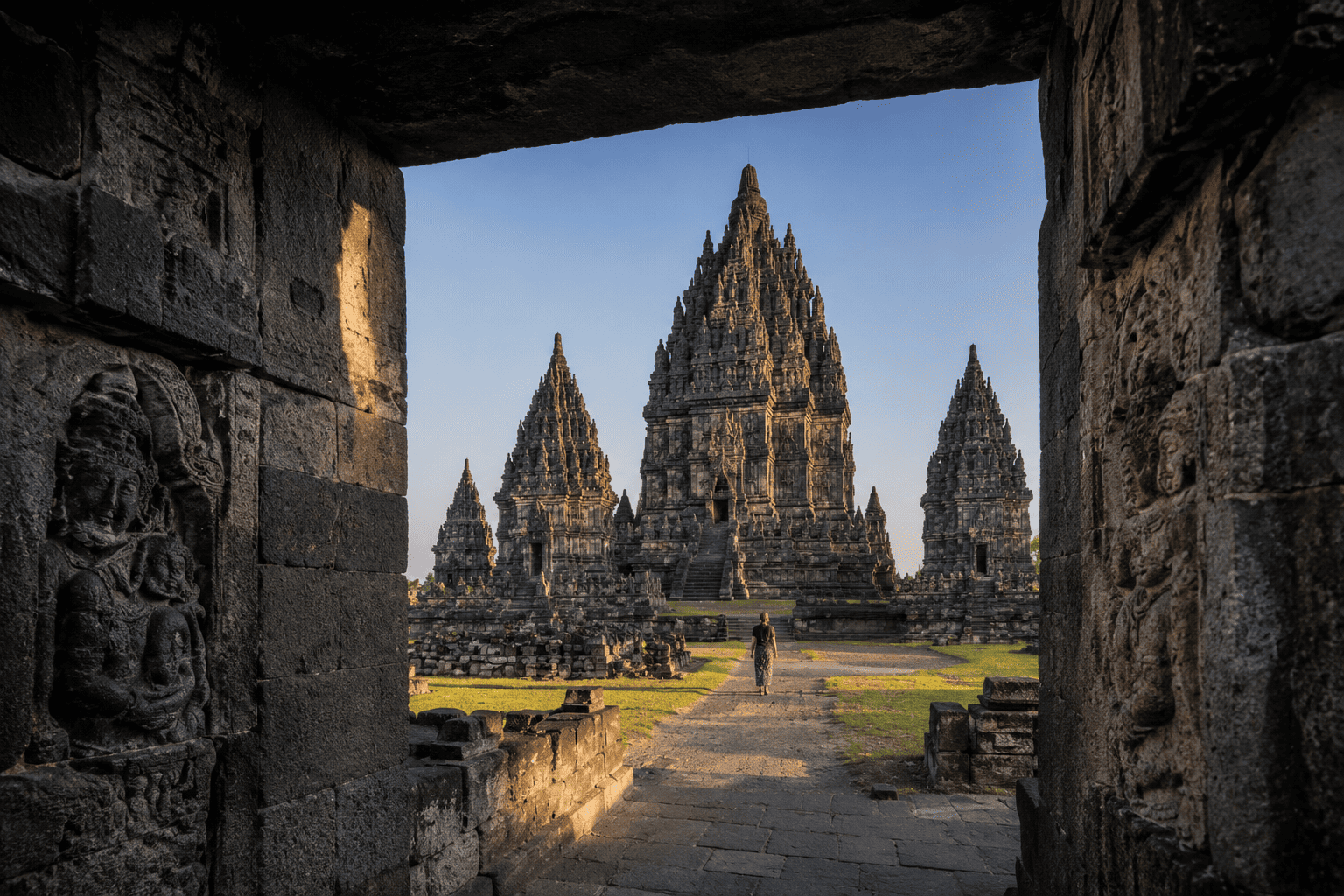
An Explore Prambanan Temple Indonesia journey allows travelers to experience one of the most remarkable Hindu heritage sites in Southeast Asia. Located near Yogyakarta, Prambanan combines ancient architecture, religious history, cultural traditions, and artistic achievements into one unforgettable destination.
Many travelers visit Prambanan because of its impressive towers and historical atmosphere. However, the temple offers much more than a beautiful landmark. It provides a deeper understanding of ancient Javanese civilization and Hindu heritage in Indonesia.
For travelers aged 25 and above, exploring Prambanan creates a meaningful cultural experience. Visitors can connect with history while enjoying one of Yogyakarta’s most iconic attractions.
The Historical Background of Prambanan
The Explore Prambanan Temple Indonesia experience begins with understanding the origin of this ancient monument.
Prambanan was constructed during the 9th century during the Mataram Kingdom period.
The temple complex was dedicated to the Hindu Trimurti, including Shiva, Vishnu, and Brahma.
The Shiva Temple became the largest structure and represents the importance of Hindu beliefs during that period.
Ancient builders created Prambanan as a place for worship, ceremonies, and spiritual activities.
The monument reflects the advanced knowledge and creativity of classical Javanese society.
Travelers can explore more about Prambanan’s history, architecture, and cultural significance through this complete guide to Prambanan Temple and the biggest Hindu temple in Indonesia.
Exploring the Magnificent Architecture
Prambanan is famous for its impressive Hindu architectural style.
The tall temple structures feature detailed stone carvings and carefully planned designs.
Central Shiva Temple creates a powerful visual experience with its height and detailed decoration.
The temple layout reflects Hindu concepts about the relationship between humans, nature, and the divine world.
Furthermore, the architectural balance shows the advanced skills of ancient builders.
Visitors can appreciate how art, engineering, and spirituality were combined in one monument.
Stories Preserved Through Ancient Reliefs
The relief panels at Prambanan provide valuable cultural information.
Many carvings illustrate scenes from the Ramayana epic.
The stories communicate important values such as courage, loyalty, and responsibility.
Ancient artists used stone as a medium to preserve mythology and cultural traditions.
Visitors can explore these stories while walking around the temple structures.
The detailed carvings also provide information about ancient Javanese artistic techniques.
Experiencing Prambanan Culture
A visit to Prambanan is not only about exploring an ancient building.
The surrounding area offers various cultural experiences.
Travelers can enjoy traditional performances, local crafts, and cultural activities near the temple.
The Ramayana Ballet is one of the most popular cultural performances, combining dance, music, and storytelling.
This experience allows visitors to understand ancient Hindu stories through modern artistic expression.
Planning a Prambanan Journey
Proper planning helps travelers enjoy Prambanan more comfortably.
Early morning and late afternoon are recommended times because temperatures are more comfortable.
Visitors should prepare comfortable shoes, water, and sun protection.
A guided tour can also improve the experience by providing historical explanations and travel convenience.
For travelers who want a comfortable cultural journey, explore professional Yogyakarta tour services with local guides and customized travel experiences.
Explore the Beauty of Prambanan Temple Indonesia
An Explore Prambanan Temple Indonesia journey reveals the connection between history, architecture, spirituality, and culture.
Prambanan remains one of Indonesia’s greatest heritage destinations.
Plan your Yogyakarta adventure and explore the ancient Hindu legacy preserved at Prambanan Temple.