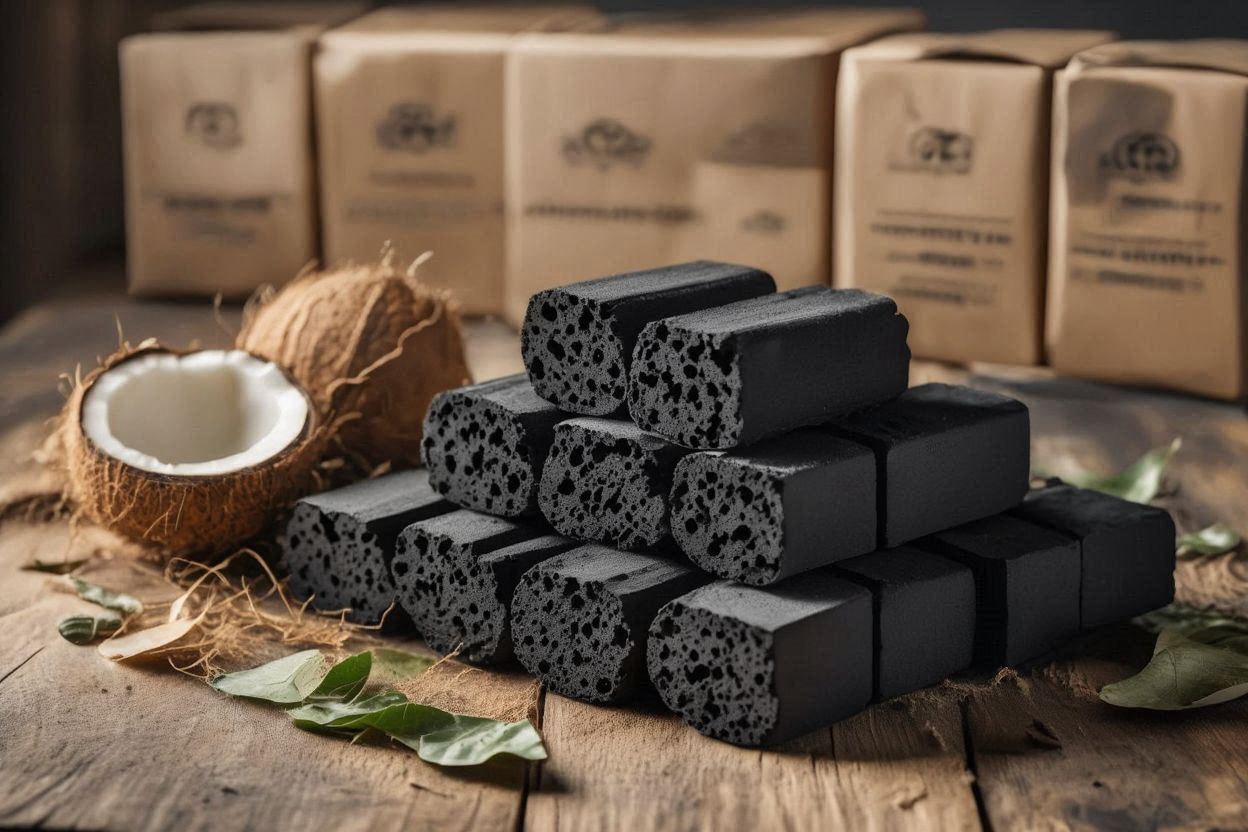
Natural coconut charcoal briquette export company plays a significant role in supplying environmentally friendly fuel products to international buyers. Many industries prefer coconut shell charcoal briquettes because they generate stable heat, produce minimal smoke, and burn for a long time during use.
Moreover, export companies connect manufacturers with distributors, retailers, and commercial businesses across different countries. Through organized production systems and global shipping networks, these companies consistently deliver coconut charcoal briquettes to international markets.
Growing Global Demand for Natural Coconut Charcoal Briquettes
The demand for natural coconut charcoal briquettes continues to grow in many parts of the world. For example, countries in the Middle East, Europe, and North America import large volumes of coconut charcoal for commercial and hospitality industries.
In addition, shisha lounges prefer coconut charcoal because it burns evenly and produces consistent heat without affecting the flavor of tobacco. Therefore customers enjoy longer sessions while maintaining stable heat levels throughout charcoal usage.
Meanwhile barbeque restaurants and food businesses also use coconut shell charcoal briquettes for grilling. As a result the briquettes provide reliable heat that helps chefs cook meat and other dishes with consistent results.
Advantages of Natural Coconut Shell Charcoal Briquettes
Natural coconut shell charcoal briquettes offer several advantages compared to conventional wood charcoal. For instance their high carbon content allows them to generate strong and stable heat for extended cooking or shisha sessions.
Additionally coconut charcoal briquettes produce low ash residue during combustion. Because of this users maintain a cleaner cooking environment and reduce the time required for equipment cleaning.
Furthermore a trusted coconut charcoal briquette supplier often produces premium briquettes without chemical additives. This approach creates a cleaner fuel source while supporting environmentally responsible energy solutions.
How Coconut Shells Become Charcoal Briquettes
First producers collect coconut shells that widely exist as agricultural byproducts. Instead of wasting these materials producers transform the shells into valuable charcoal fuel.
Next manufacturers carbonize the coconut shells through controlled heating to produce charcoal. After that workers crush the charcoal into fine powder and mix it with a natural binder to form a briquette mixture.
Then machines compress the mixture into shapes such as cubes, hexagonal pieces, or pillow forms. Finally producers dry the briquettes and perform quality inspections before shipping them to international markets.
Choosing a Reliable Coconut Charcoal Export Company
Importers and distributors must carefully select export companies to maintain consistent product quality and supply stability. Therefore reliable export companies apply strict quality control during production and packaging stages.
In addition professional export companies understand international shipping procedures including container loading, documentation, and packaging requirements for long distance transportation.
Businesses that want to explore product specifications and global supply options can visit jacoid.com to access detailed information about coconut shell charcoal briquettes.
Future Opportunities in the Coconut Charcoal Industry
The coconut charcoal industry continues to expand as global markets search for sustainable fuel alternatives. At the same time coconut shells provide a renewable raw material that supports environmentally responsible production.
Consequently more industries adopt coconut shell charcoal briquettes for cooking and shisha applications. Because of this trend export companies gain opportunities to expand into new international markets.
Therefore rising demand and expanding global trade keep strengthening the charcoal market. As a result a natural coconut charcoal briquette export company remains an important part of the international charcoal supply chain.